Enabled 5,000+ clinics to efficiently manage hundreds of payer relationships.
Reducing administrative burden and improving accuracy for over 1 million patients, this end-to-end redesign of Sycle's Payers & Plans system turned siloed insurance workflows into a unified, scalable experience through deep research and cross-functional alignment.
The problem we needed to solve
Sycle's payer and plan administration workflows were fragmented, error-prone, and difficult to scale, creating administrative drag for clinics and internal teams.
As Lead Product Designer on the Payers and Plans team, I…
- •Led end-to-end discovery, synthesizing interviews, support data, and industry research into clear problem statements that shaped the product strategy.
- •Translated complex payer and plan workflows into a unified, scalable system by partnering closely with Engineering on data-model and IA decisions.
- •Drove cross-functional alignment with Product Owners and Tech Leads, ensuring priorities balanced user needs, technical feasibility, and business goals.
- •Facilitated roadmap planning sessions that broke a large initiative into iterative, de-risked releases with clear milestones and measurable outcomes.
- •Designed and validated new workflows through multiple rounds of internal reviews and customer sessions, ensuring clarity, usability, and system coherence.
- •Provided detailed, high-fidelity specifications and guidance to enable efficient development, smooth handoff, and consistent interpretation in JIRA and Zeplin.
- •Supported development through ongoing collaboration, clarifying edge cases, unblocking decisions, and maintaining design intent through final delivery.
- •Partnered with marketing and support teams to prepare clinics for adoption, ensuring a confident rollout and strong early engagement.
Listening to Clinics to Uncover Real-World Friction
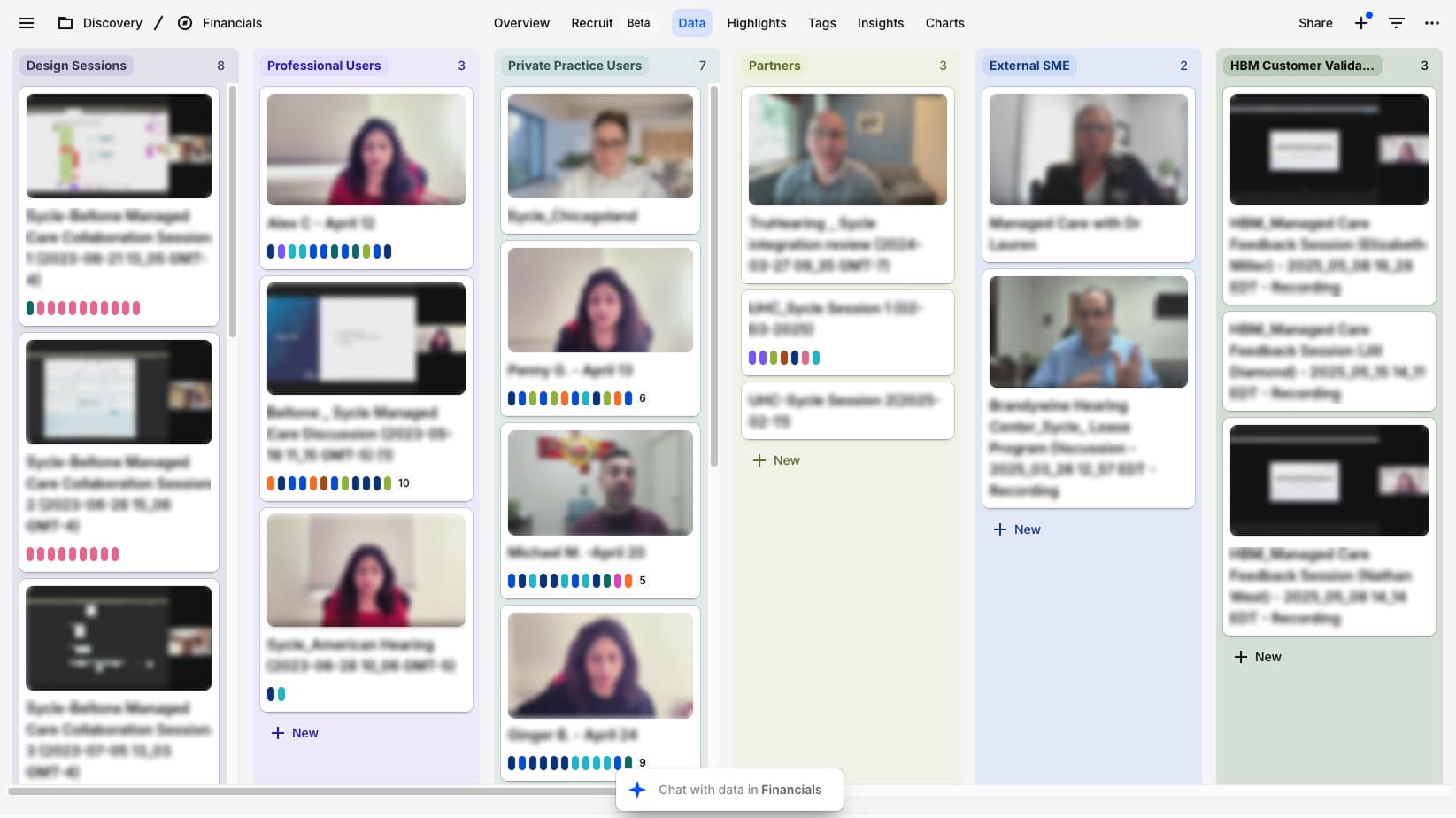
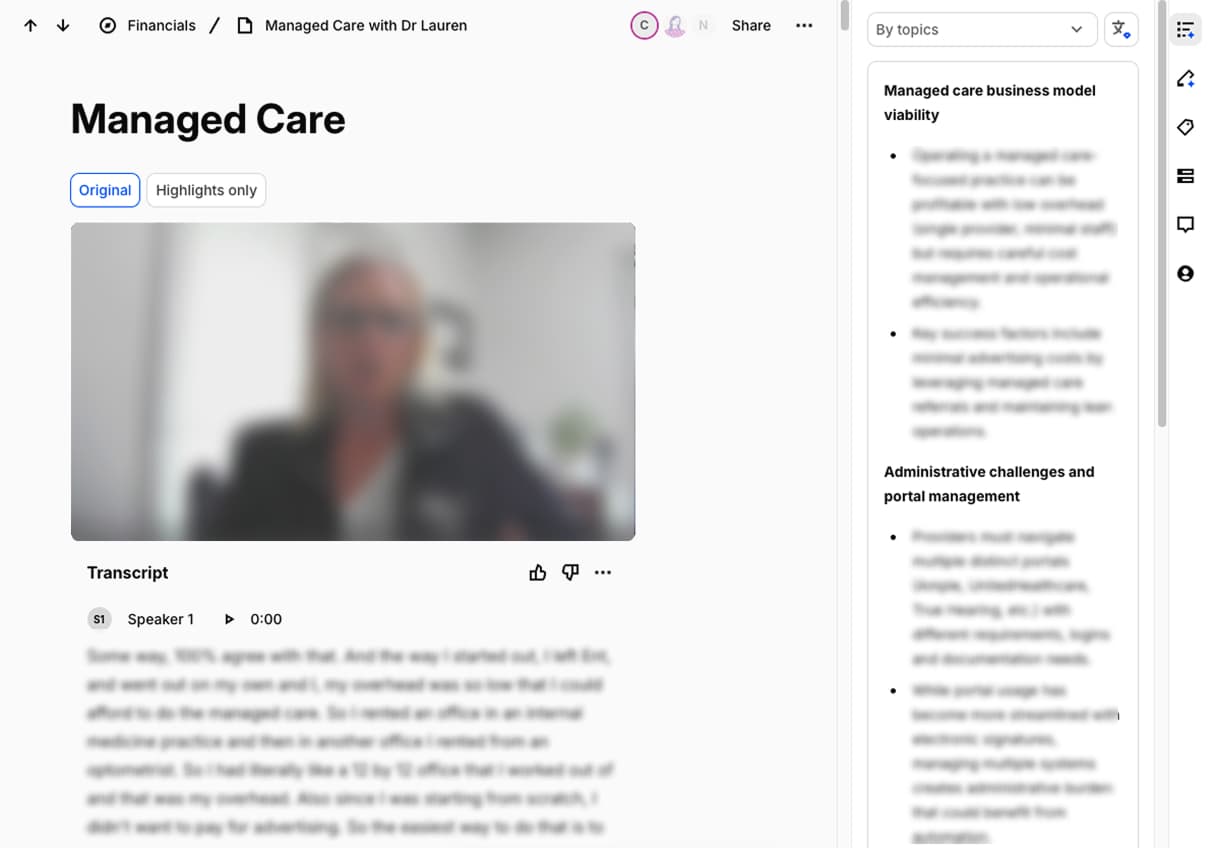
To understand the challenges of payer and plan administration, I partnered with a Product Researcher to audit support tickets and conduct more than 15 in-depth interviews with clinic owners, managers, audiologists, and front-desk coordinators. Each session was recorded, transcribed, and analyzed in Dovetail to identify recurring friction points, accuracy gaps, and opportunities for automation.
Together, we mapped issues around payer and plan setup, visit limits, and reconciliation errors. In parallel, we reviewed industry publications, managed-care documentation, and anonymized payer contracts to uncover systemic patterns across the sector. These combined insights revealed how clinics interpret payer and plan rules, track coverage limits, and navigate reimbursement restrictions. This foundation informed a scalable Payers & Plans model that could flex to any payment system, not just HBM.
Inadequate Tools and Disconnected Data Create Unnecessary Workload for Clinic Teams
Clinics lacked effective tools to organize and manage payers, causing inefficiencies across billing workflows. Payer and plan data existed in separate modules, preventing clear attribution of payments and creating costly reconciliation errors. This fragmentation limited visibility, forced manual workarounds, and made accurate reporting very difficult.
Clinics Struggle Between Managed Care, Margins, and Mission
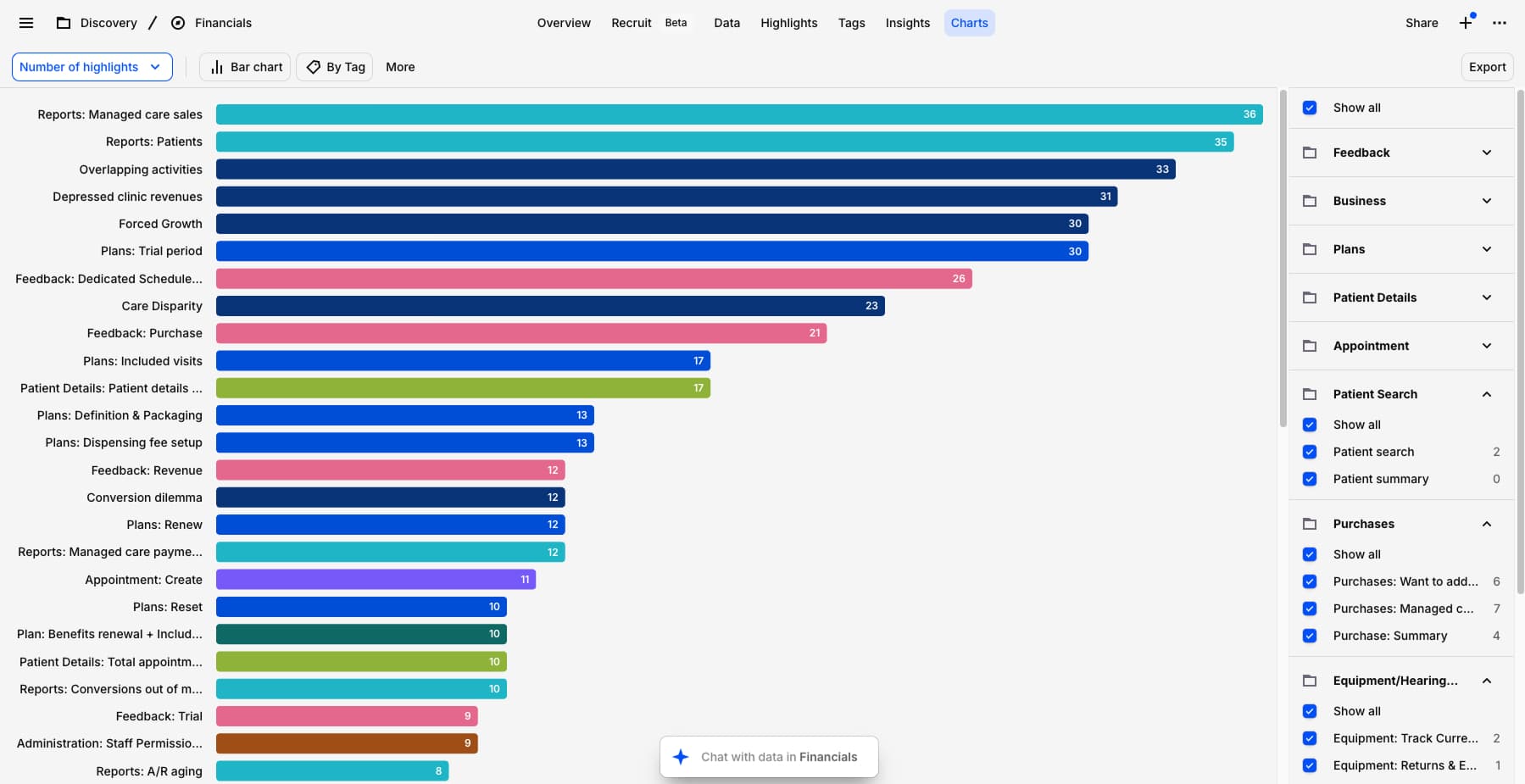
Managed-care acceleration
By 2024, managed-care plans represented over half of all patient caseloads, a seismic shift from 23 percent in 2010. Clinics now depend on complex contracts to stay competitive.
“Three months of no referrals, we had to start accepting managed care patients just to stay open.”
Margins are collapsing
Thin hearing-aid profits mean clinics rely on billable service appointments. Administering multiple plans often offsets the limited revenue those services generate.
“We're spending more time managing plans than serving patients.”
Care disparity is widening
Managed-care restrictions on visit counts and device selection strain both clinicians and patients, reducing perceived care quality.
“Sometimes I can't recommend the best hearing aid because the Managed-care contract locks the patients into products that won't fully meet the patients needs.”
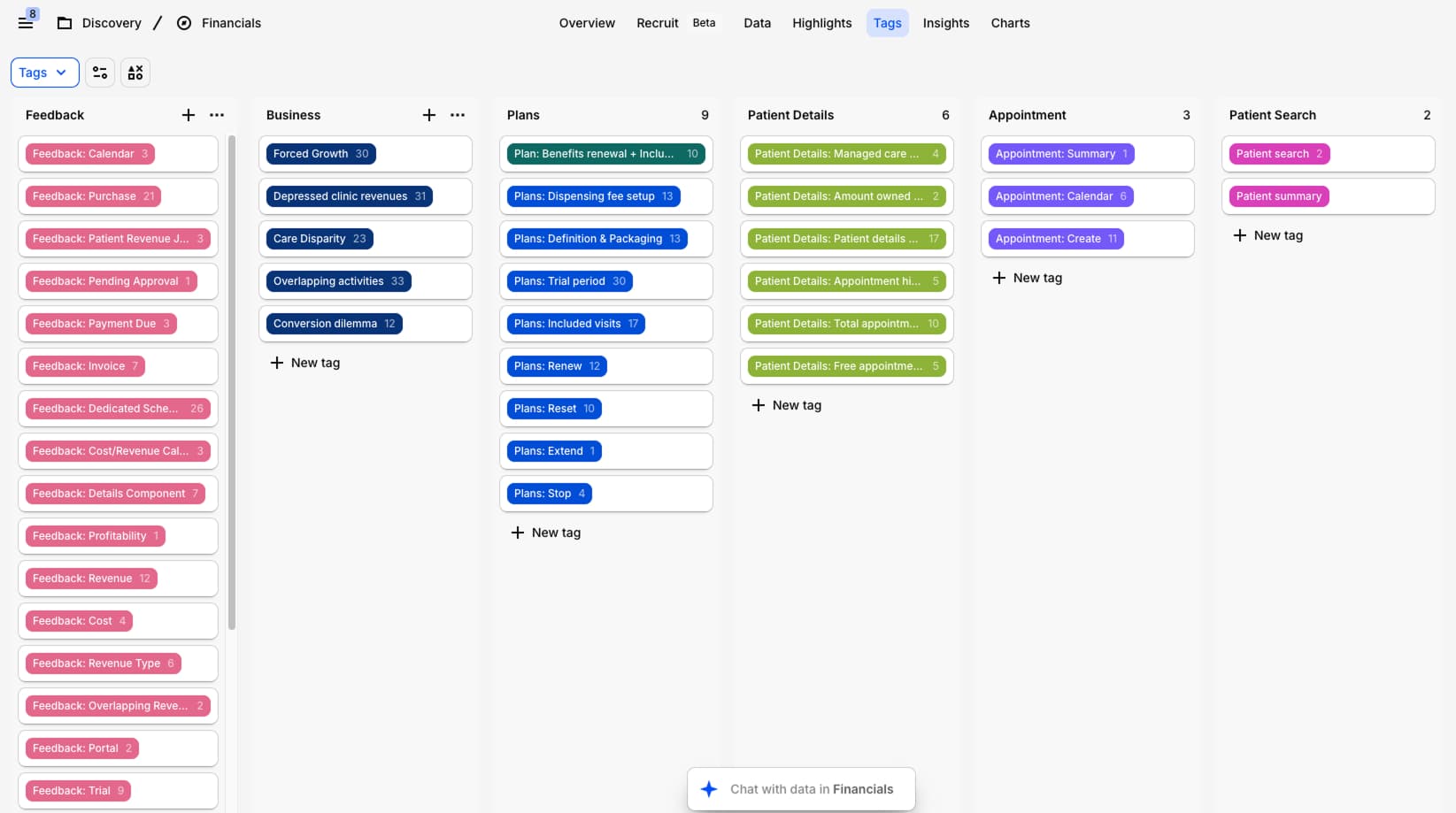
Clinics wrestled with disjointed tools, blind spots, and rigid processes
Complex setup
No single place to create or edit payers and plans.
Invisible patient limits
Visit counts and trial durations were tracked manually, leading to frequent errors.
Rigid plan actions
Clinics needed flexibility to handle real-world exceptions like renewing, stopping, or extending plans and trials.
Revenue blind spots
Inefficient reporting meant users had difficulty tracking payer-specific revenue or analyzing profitability.
From Complexity to Clarity
We navigated legacy constraints, aligned across teams, and shaped a new foundation for growth through iterative design and close collaboration.
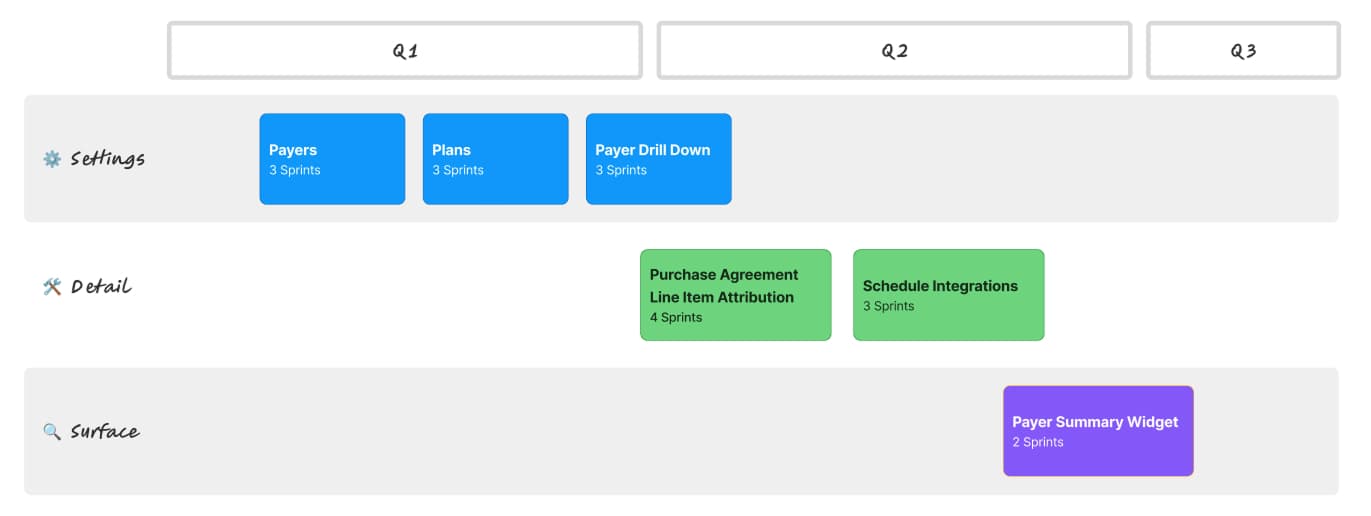
Roadmapping an iterative release cadence
To manage a project of this scale, we aligned on an iterative release cadence. I co-facilitated planning sessions with Product and Engineering to map dependencies, prioritize by risk and impact, and define milestones that could deliver value early while validating direction.
Creating a Scalable Model
Early discovery revealed that insurance and managed-care data lived in separate silos. I partnered with our Tech Lead to unify these under a shared architecture so any payer type, insurance, managed-care, or custom could coexist. This became the foundation for all future workflows.
Defining Success Without Data
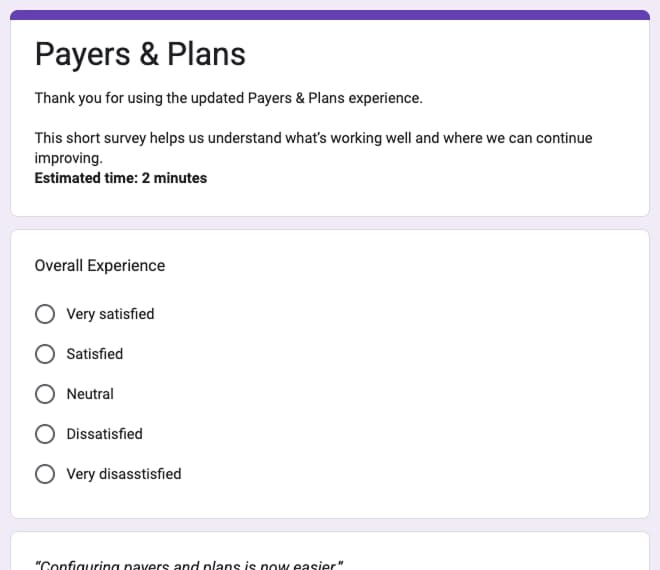
Sycle had limited product analytics, so I introduced qualitative proxies: interviews, surveys, and pilot feedback. We measured success by adoption signals and reduced setup friction, ensuring clinics could configure payers and plans with confidence.
Mapping the Future of Payers & Plans
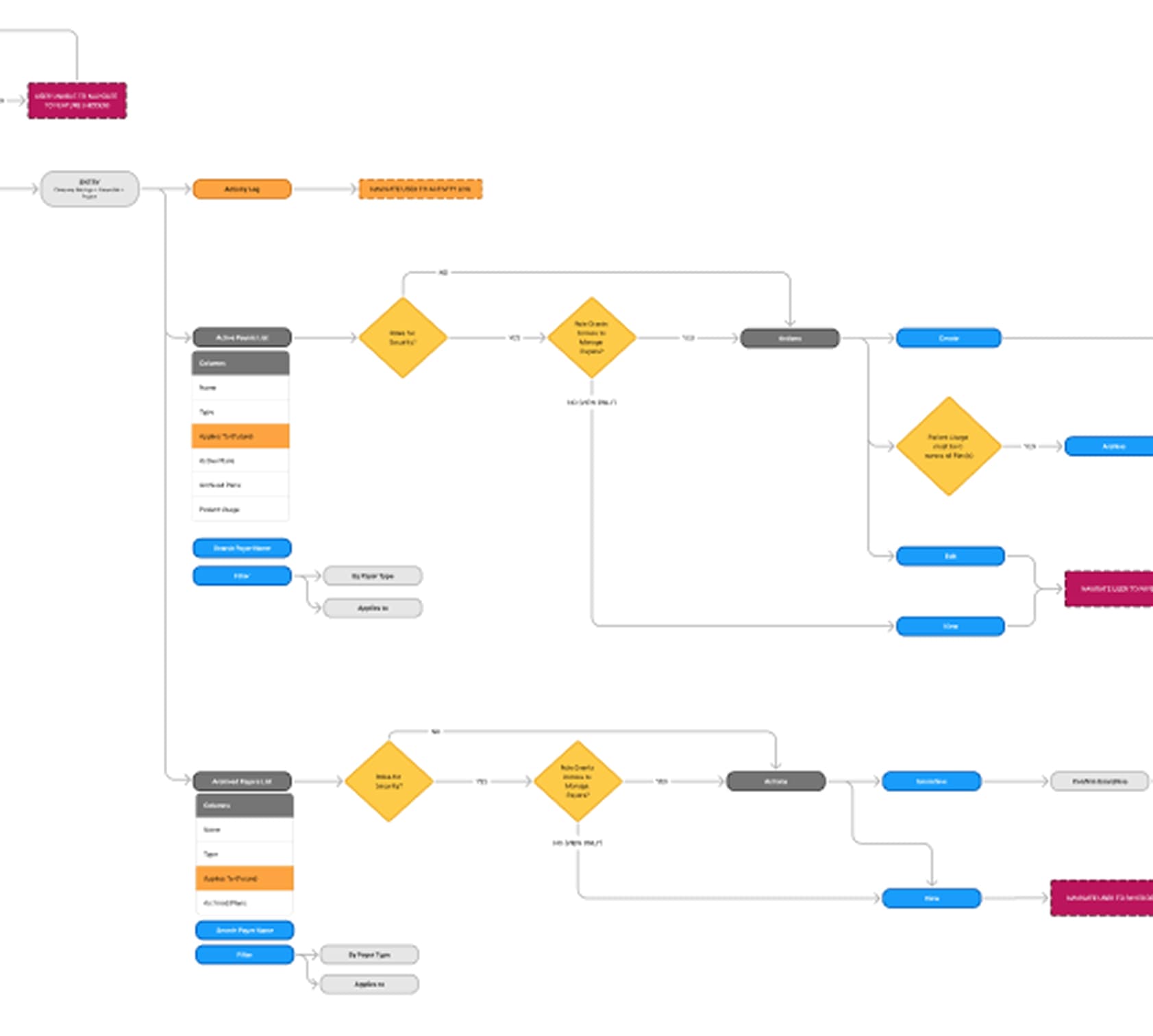
I mapped existing payer and plan flows, exposing legacy dependencies hidden in code. Using FigJam, I redesigned the flow so clinics could administer payers and plans from a centralized experience. We surfaced technical constraints early through co-design with engineers, preventing rework downstream.
Key Decisions
We rethought the foundation of Payers & Plans, rebuilding the data model, simplifying key attributes, and aligning it with updated roles and permissions. These choices created a more flexible, scalable, and secure system for clinics.
Information Architecture
Engineering was to first rebuild the data model to support flexibility while preserving backward compatibility.
Data Attributes
We streamlined the payer and plan detail fields to maintain scalability while avoiding over-engineering, keeping the data attributes both flexible and useful for users.
Roles & Permissions
Integrated Sycle's new Company Settings framework for secure, role-based access control.
Shaping the Experience Through Early Feedback
With governance patterns established, we moved into early design and validation to ensure the concepts reflected real user needs. I created initial mockups in Figma and led internal and external feedback sessions to test our direction. The goal was to confirm that the experience met expectations, included required functionality, and aligned with technical feasibility.
After several rounds of iteration, feedback shifted from structure to detail. By the final sessions, responses were strongly positive and confirmed that the design direction resonated with users and stakeholders.
The Green Path to Development
After several rounds of iteration, we finalized the green path and confirmed the experience was ready for development. I documented field requirements, produced high-fidelity wireframes, and partnered with go-to-market teams to prepare supporting materials. Product management aligned JIRA tickets with the design requirements, and I moved the design assets into their master state to signal that engineering could begin development with confidence.
Setting Engineering Up for Success
At Sycle, design handoff is a critical step in the development process. I ensured all wireframes were finalized in high fidelity with clear annotations, interaction notes, and supporting guidance. Once the Product Owner confirmed that JIRA tickets matched the requirements, we committed the designs to their master state and uploaded them to Zeplin. With everything prepared and aligned, the development team could begin implementation with clarity and confidence.
Partnering with Engineering Through Development
Once the designs were handed off, our focus shifted to supporting development and maintaining quality throughout implementation. I stayed available to answer questions, clarify edge cases, and unblock decisions, which kept collaboration smooth and delivery on track.
Efficient Payer and Plan administration
The solution brings together everything we learned through research, feedback sessions, and technical exploration. The result is a clear, scalable experience that helps clinics manage payers with accuracy and confidence.
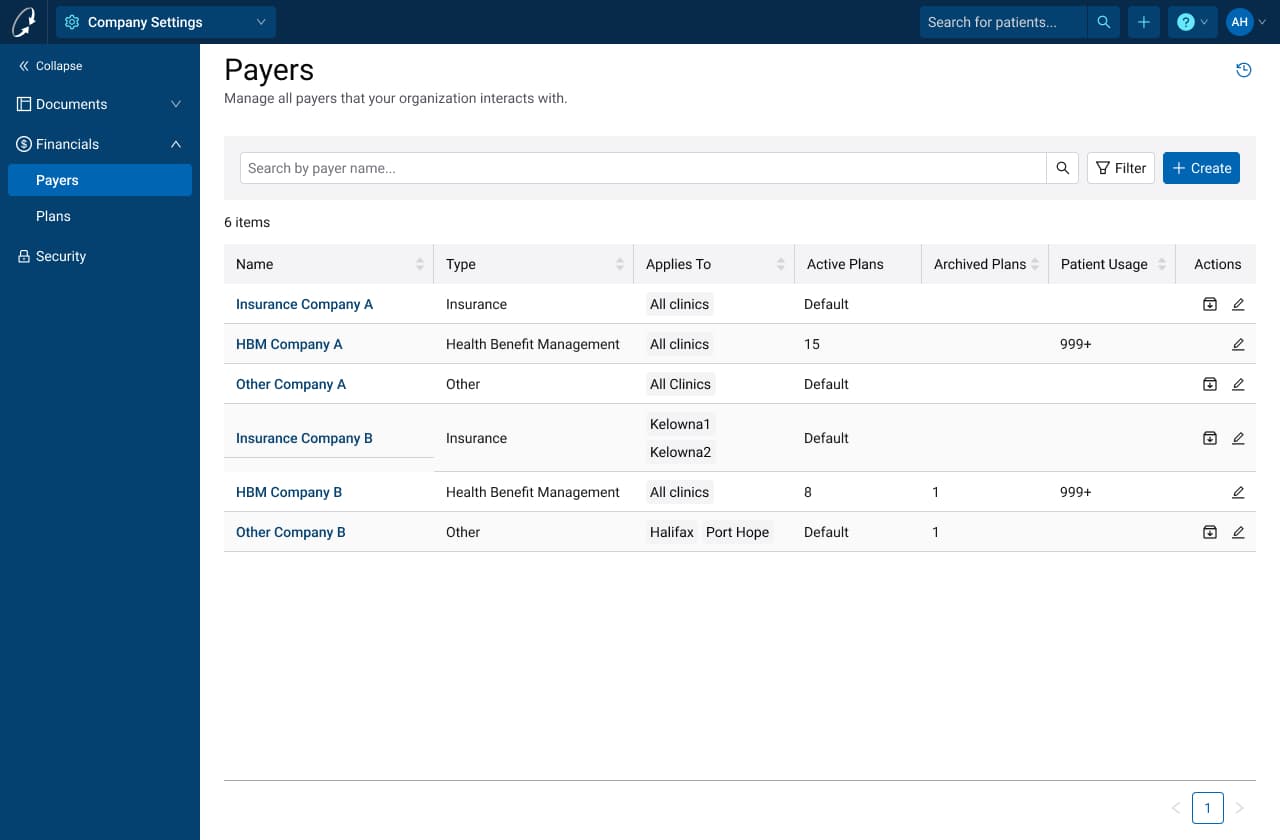
1 - Payers Screen
Users can now view all Payers in a single list with key metrics and navigation
2 - Payer Configuration
Users can create and edit Payers in a single form with validation and configuration options
3 - Plan Management
Drilling down into a Payer shows all Plans associated with that Payer
4 - Plans Screen
Users can now view all Plans in a single list with key metrics and navigation
Survey Results
We sent a follow-up survey to 100 pilot participants and received 84 responses. In the weeks following rollout, 87% of respondents reported using Payers and Plans at least once per week.
81% agreed or strongly agreed that configuring payers and plans is now easier.
90% agreed or strongly agreed that visibility into visit limits and trial durations has improved.
Among respondents who handle payer exceptions (17 total), 88% agreed or strongly agreed that managing non-standard payer types is now easier.
95% agreed or strongly agreed that new role and permission controls are useful.
92% reported being satisfied or very satisfied overall with the new experience.
From Foundation to Future
This project became more than a design challenge. It required alignment, patience, and systems thinking. Redefining how clinics manage payers depended on close collaboration, a commitment to simplifying complexity, and empathy for the administrative realities users face each day. These reflections capture what I learned while leading an initiative that balanced user needs, business goals, and technical feasibility.
Bridging Complexity with Clarity
Designing for payer administration revealed just how much complexity clinics handle. Simplifying it required shared understanding across product, engineering, and business teams, reminding me that design isn't only about usability, it's about creating clarity for everyone involved.
Leading Through Ambiguity
When I joined Sycle, limited analytics meant relying on qualitative insights, listening, spotting patterns, and using storytelling to guide direction. It reinforced the value of narrative design leadership: connecting user needs with business goals and technical realities.
Building Trust Across Disciplines
Our success relied on strong trust across design, product, and engineering. Bringing engineers into early flow mapping and technical discovery turned constraints into design inputs, creating a collaborative model we now use across Sycle.
Designing for Scale, Not Screens
What started as a UI problem quickly became a systems challenge, requiring us to re-architect how payer and plan data connect across modules. It reminded me that real design impact often happens beneath the surface, in the models and patterns that shape the product well beyond a single release.
Extending the Payers and Plans Ecosystem
With the foundation for Payers and Plans in place, the next phase focuses on deeper integration across the patient journey. The upcoming enhancements are designed to improve visibility, consistency, and speed for clinic staff who manage payer-related workflows.
Purchase Agreement Line Item Attribution
We will improve the purchase agreement experience so users can accurately attribute each invoice line item to a payer. This replaces inconsistent workarounds with a standardized process that strengthens data consistency and financial reporting.
Payer Widget for Key Workflows
We plan to introduce a payer widget that surfaces key payer details within workflows like Patient Summary, Appointment Summary, and Purchase Agreement. This quick-view will help staff understand payer type and financial status faster, streamlining scheduling and billing.